
When Students “Love” a Math Strategy
Written by: Jessica Miller
“I showed my students ___ and they loved it!”
I hear this phrase a lot when I visit math classrooms and when I provide professional development to teachers and coaches. It is often said to me after we explore a computation algorithm from a vetted textbook or resource. They might say something like, “OK, but I don’t see why I have to teach that way and my students don’t understand it and didn’t like it last year. You know what I did last year instead? I showed them _____, and they loved it!” And I completely understand the excitement behind what these teachers are sharing. When we try something with our students and see that they can use it successfully, it can feel like a success as a teacher.
But lately, I’ve been wondering if there is more we need to consider when we say students “loved” a strategy. What do we really mean when we say students loved it?
- Do we mean it made the math easy for students?
- Do we mean it made the math fast for students?
- Or are we really saying, “I showed them this strategy, they were able to do it easily, and they seemed to enjoy it, so I assumed they loved it”?
I think this is an important distinction. Because sometimes, the strategies students “love” the most are the ones that require the least mathematical thinking. A trick, shortcut, or rhyme can feel successful because students can get an answer without really understanding the mathematics behind it. And when students can get an answer quickly, it can be tempting to view that as evidence that the strategy is working. But getting an answer and learning mathematics are not always the same thing. And I think this is where we have to be careful.
“Because sometimes, the strategies students “love” the most are the ones that require the least mathematical thinking.”
As adults, we can look at something we found on social media and immediately see how and why it works. We can connect it to the computation we are teaching. We can recognize the mathematical property underneath the strategy. But we are bringing years of mathematical experiences and understanding to that strategy. Our students aren’t bringing those same understandings.
For example, as adults, we may understand why, when multiplying by 6, we can show the other factor on our fingers, count by 5s across those fingers, and then count on by ones across those fingers to reach the product. For example, we can solve 6×4 by holding up 4 fingers, counting by 5s across those fingers (5, 10, 15, 20) and then counting on by ones across the fingers again (21, 22, 23, 24). We, as adults, can see the connection to the mathematics—we are using a break-apart strategy. In this case, we are breaking apart one factor, 6, into two factors, 5 + 1. We are then multiplying each part by 4 (5 x 4 and 1 x 4) and then adding the parts together. Our students may simply see a trick that helps them get an answer. (And if, as teachers or parents, we are also just seeing a trick, I would encourage us to think twice before teaching it to students.)
When we teach tricks like this instead of helping students understand the mathematics, we strip away the very mathematics we want students to learn. We WANT students to work flexibly with numbers. To try new ideas and create generalizations about why something works the way it does. When we teach them a trick instead of teaching them to think and play with mathematics on their own, we take away their opportunity to learn and to think like mathematicians.
Sometimes a strategy in a textbook can feel unfamiliar. It may not be the way we learned to solve the problem. It may take more time than the shortcut we have used before. And we may not immediately see why students need to learn it. But that doesn’t mean the strategy isn’t important to learn. The strategies in textbooks are selected because they support the mathematics students are learning. They are designed to build understanding, help students to make connections, and give students something they can build on as their mathematical thinking develops. The strategies teach something.
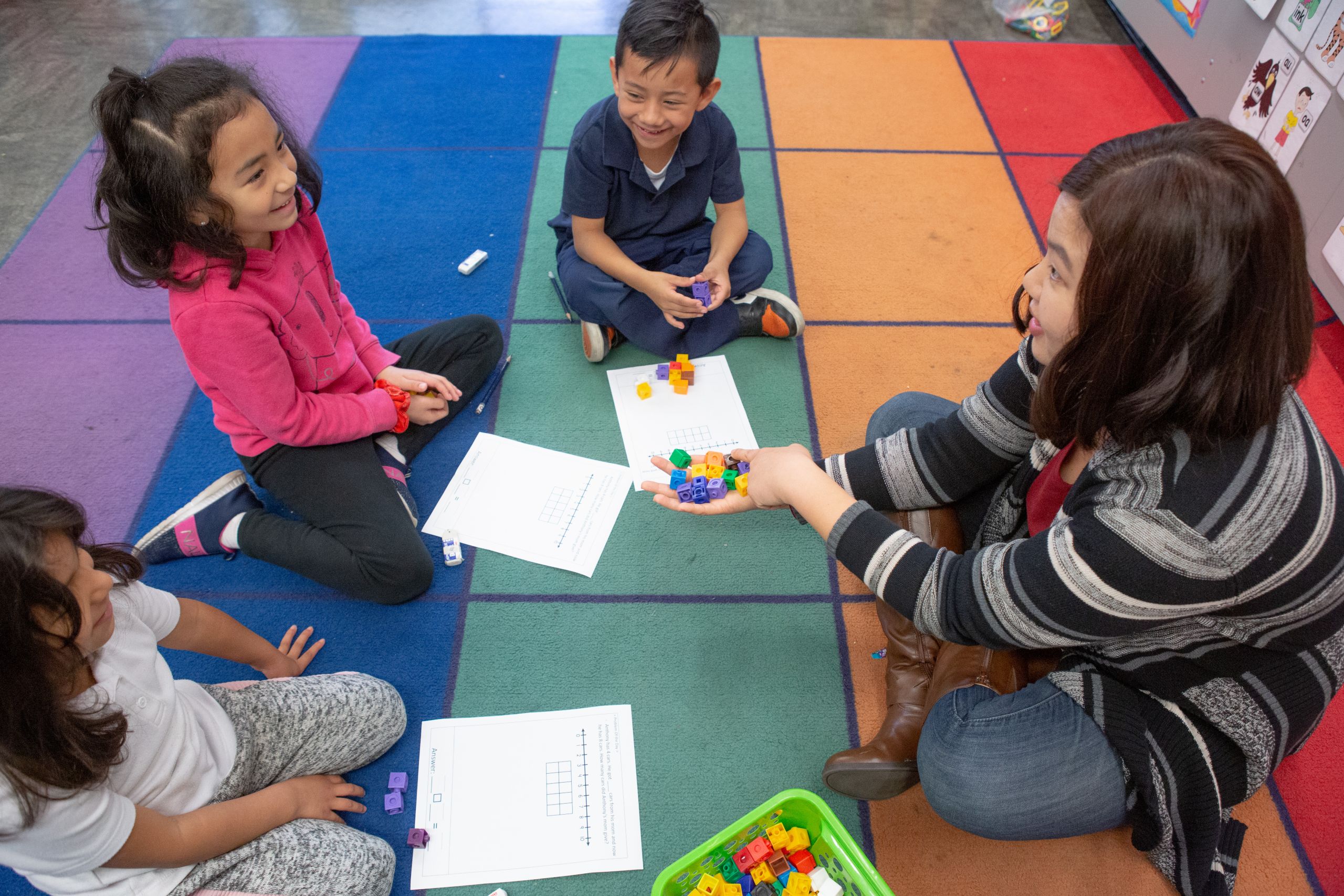
“Students may have to work a little harder to make sense of a strategy. They may not immediately “love” it. They may need time, discussion, models, and opportunities to use it before it becomes comfortable. That doesn’t mean the strategy isn’t working.”
Students may have to work a little harder to make sense of a strategy. They may not immediately “love” it. They may need time, discussion, models, and opportunities to use it before it becomes comfortable. That doesn’t mean the strategy isn’t working. That might actually be the point.
When we teach mathematics, our goal isn’t simply to give students strategies that help them arrive at an answer as quickly as possible. We want students to develop mathematical understanding that they can use, connect, and build on. Sometimes that learning feels easy. Sometimes it doesn’t. Sometimes students enjoy the challenge. Sometimes they don’t. And that’s okay. So instead of asking, “Did they love it?” maybe we should ask a few different questions:
- Did it help students make sense of the mathematics?
- Did they understand why it works?
- Can they connect it to other mathematical ideas they already understand?
- And did it give them another meaningful strategy they can use when solving future problems?
I love when students find a strategy they enjoy using. I want students to feel confident and successful in mathematics. I just want to make sure that what they are enjoying is the mathematics – not simply a shortcut. Sometimes, the strategies that help students learn the most won’t be the ones they love right away.
And that’s okay. Learning is the point.
Resources
Please login or register to claim PGPs.
Alternatively, you may use the PGP Request Form if you prefer to not register an account.