
Teaching Media Literacy through Research
Written by: Adam Current
As the iPhone prepares to exit its teenage years, glass screens have saturated our lives. Just try escaping their soft glow. Explaining the deluge to students might as well be explaining water to fish. Our screens have become something like horse blinders or portable, pocket eclipse machines. Seeing them means blindness to everything else. Either way, we’ve simply logged on and never logged off.
In the classroom, teaching media literacy feels like a lost cause. Just consider how fast the winds change. Before the ink even dries on materials, software updates will render them irrelevant. Never mind how many internet trends or entire apps will have come and gone. Relevancy feels fleeting, and our frantic digital lives outpace the slow nature of both education and print.
So how do we define media literacy? Let’s compare definitions:
- Indiana State Standards: “Analyze multiple sources of information presented in diverse media and formats while evaluating the credibility and accuracy of each source” (9-10.CC.4).
- Media Literacy Now: “the ability to (1) decode media messages, (2) assess their influence, (3) create media thoughtfully and conscientiously.”
- Google: “the ability to critically analyze stories presented in the mass media and to determine their accuracy or credibility.”
In June 2026, the National Council of Teachers of English updated their 2022 statement on media literacy. This revision goes beyond simply evaluating credibility and addresses meaning-making. It urges monitoring our own well-being with technology and ends with the ethics of artificial intelligence. That next-to-last part, monitoring our own well-being, sticks out. Screen addiction has existed since Howdy Doody and Pong, but AI represents something almost alien.
Consider scrolling through Instagram and you’ll be bombarded with information. You’ll see something, you’ll skim-read, and you’ll move on. Some things make sense while other things make you question. What might we see? In writing this post I let my algorithms run wild and I saved literally any informational content which popped up. Yes, anything. Eventually I reset my algorithms, but I’ll share some of my favorite results:
- “Yale University finds that lemon water with honey on an empty stomach may dissolve liver fat in 21 days. Can be taken at 6 AM for best results.”
- “The ocean literally grounds your body faster than bare feet on grass. Salt water conducts electrons 100x better than dry land. That full-body reset you feel after swimming in the ocean is science. Saltwater + Earth’s charge = energetic reset on a cellular level.”
- “They removed copper cups and linen sheets from hospitals in the 1800’s. But why?”
- “Washing clothes in HOT water destroys fabric toxins that absorb into skin—dermatologists found cold water traps chemicals causing 480% more rashes but Tide pays $1.5B to hide this.”
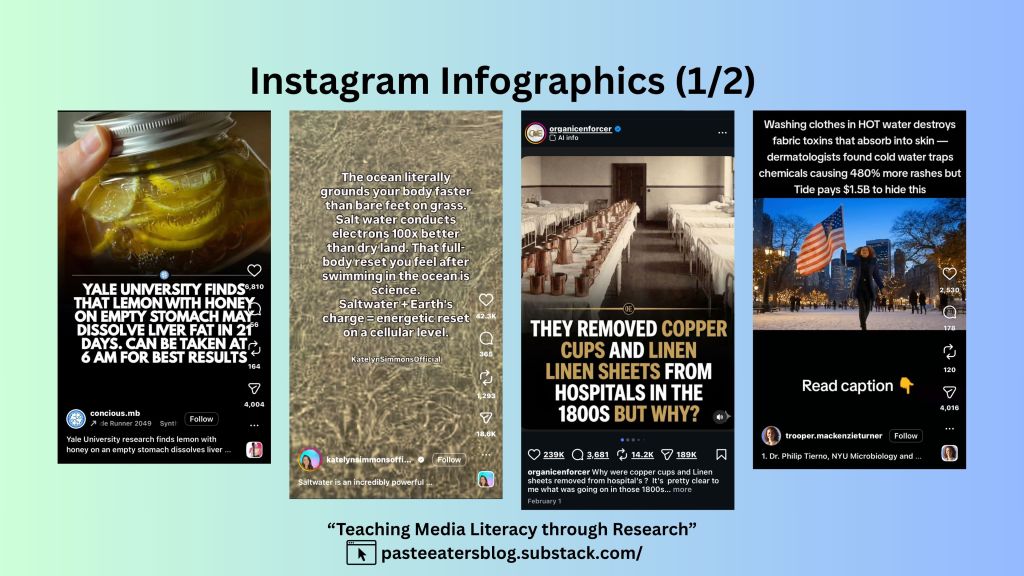
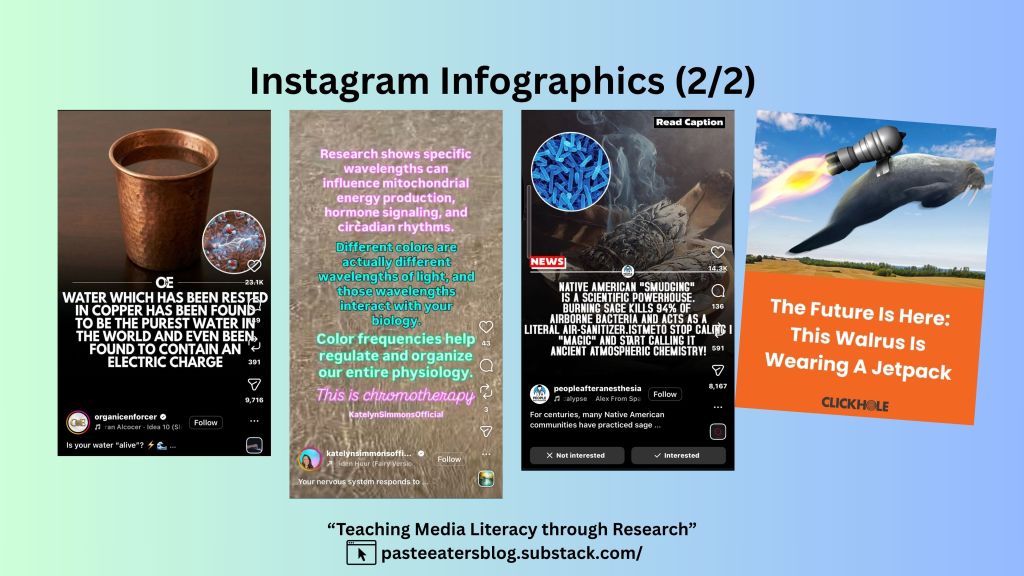
Let’s spend a minute and think through these items.
First, the Yale Study says lemon water with honey helps. Sure. It’s just a hot toddy, but cold and without the rocket fuel. So how much honey? How much lemon? How much water? The picture had a Mason Jar. Does that matter? Which study? When was it published? Did they test the honey water at different times of day? By the way, just Google searching debunks this claim.
Second, the salt life sticker sounds nice. I’ve worn barefoot sneakers for years and find myself sympathetic to grounding—pending more research, of course. So what study proves this? Does the sand matter? Do some beaches help more than others? Does the sand from Lake Michigan help as much as Ft. Lauderdale?
Third, the copper cups and linen sheets soundsounds scandalous. Big Pharma must want us sick after all! But what if we use different cups and sheets because we have better materials? Why not extend this to medicine from last century? Why not protest indoor plumbing since the 1800s still had outhouses? Why not lick lead paint or asbestos?
Fourth, the Tide-hot water connection sounds fascinating. This would mean Tide only offers cold water detergent, right? According to Amazon, they once sold a cold water formula, but it sounds like they still use hot water. So Tide pays a billion to hide something their product already does? Hmm. Got it. But the picture has an American flag at least.
If we believe everything we see, if we accept everything without questioning, then our glass screens become the shadows in Plato’s Cave. And no matter what, as a regular life skill, touching grass helps. So how do we navigate our ever-shifting world of digital illusions?
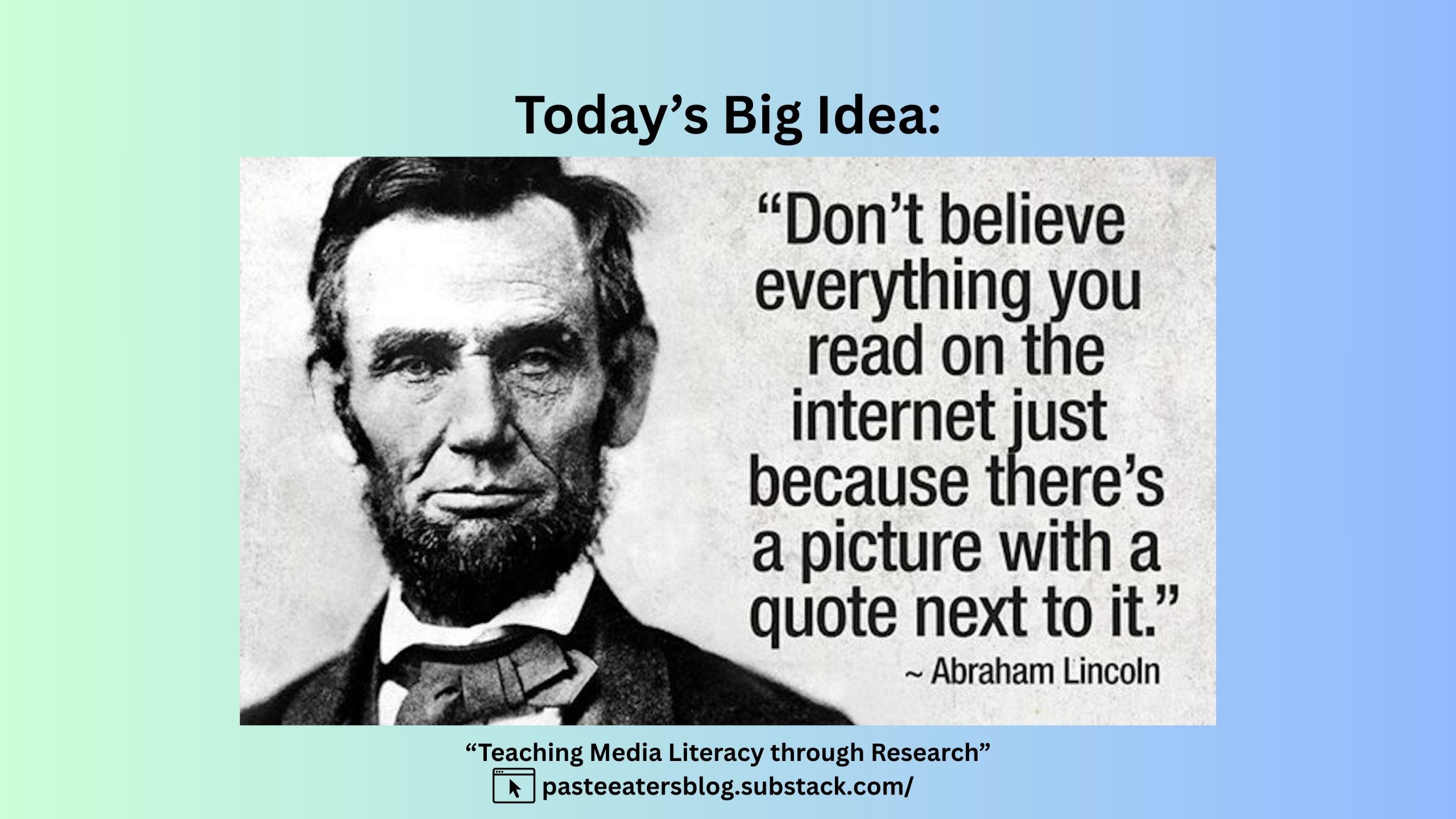
Believe or not, President Lincoln had some great advice about media literacy. He explained, “Don’t believe everything you read on the internet just because there’s a picture with a quote next to it.” And that’s true, isn’t it? At least in meaning. Of course President Lincoln never said it, but I’m sure he might have.
“Research acts as the verb and media literacy acts as the noun.”
As adults, we’ve grown with this technology while our students haven’t. We moved from VHS to DVD to Netflix, while they’ve spent their entire lives in HD. What might this mean for teaching media literacy? What skills help students analyze sources, evaluate credibility, and assess accuracy?
You know, this sounds like research to me!
Go ahead and say it: Doesn’t that substitute a harder skill? You’d think so, but not really. Let’s follow the gut reaction first. Picture the dreaded three page research paper with an MLA format, formal tone, works cited, and so on. This requires pages of conventions and procedures. If you’re old, you might still shudder from creating notecards for everything.
In principle, media literacy and research are practically synonyms. Start with this question: Research what? In some sense, research acts as the verb and media literacy acts as the noun. This goes beyond overlap. Both demand analyzing sources. Both demand evaluating credibility. Both demand assessing accuracy. However, each carries different connotations.
Research carries the connotations and associations of high stakes, formal activities. Just see the Spring Research Paper. But this isn’t quite right. Simply asking for sources – and then critiquing them – doesn’t require note cards or works cited pages at all. Sure, formal research methodologies exist for science and statistics, but simply asking the right questions costs nothing.
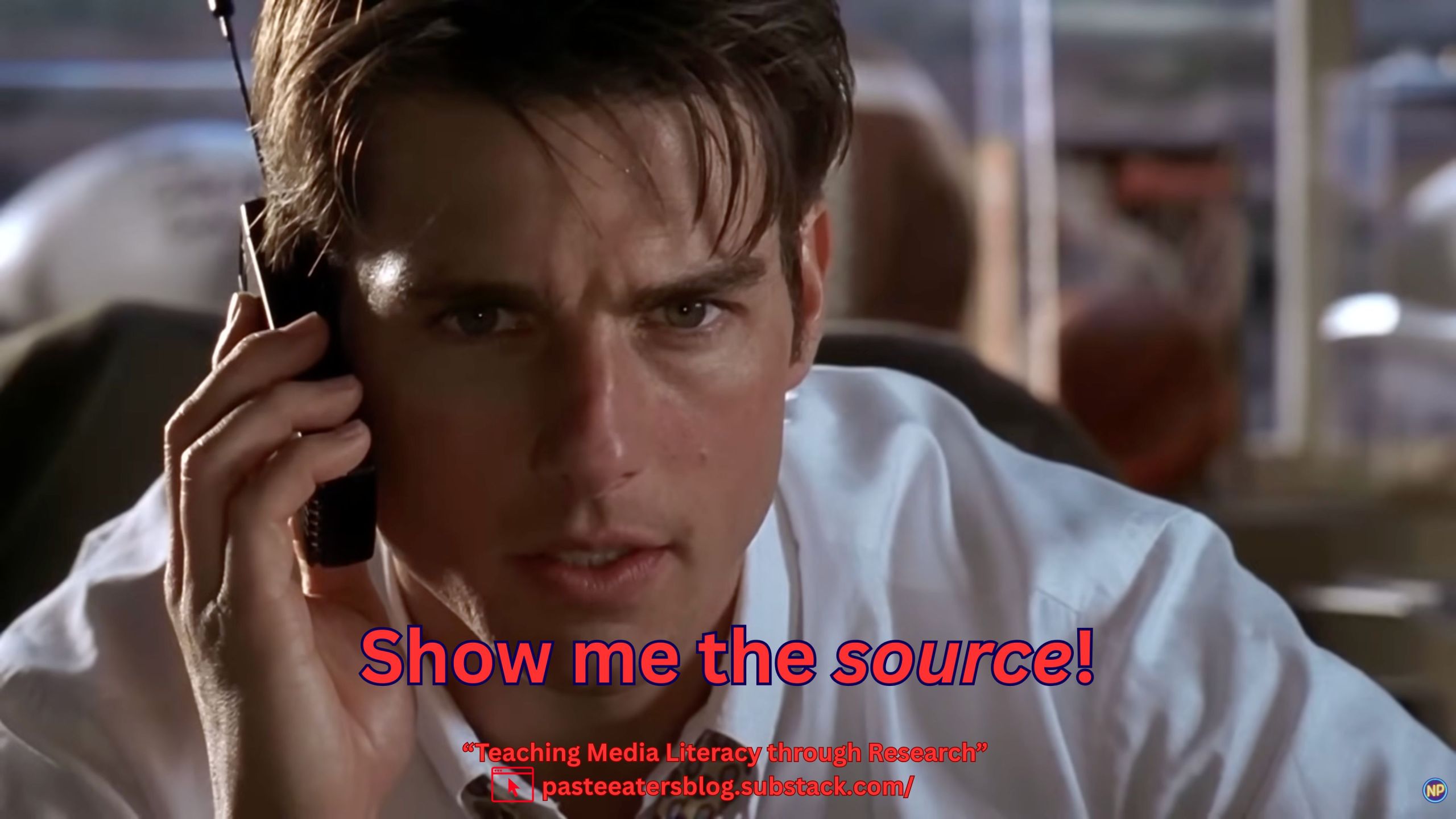
In practice, research helps media literacy through documenting sources. If you need a catchphrase, channel Jerry McGuide: Show me the source. (It’s not as catchy, but the vibe matches.) Citations bond facts to sources. The move from “some study says” to “this study says.” Once sources become visible and tangible, this opens methods to criticism. When you’re talking random infographics, this makes all the difference.
Too bad teaching isn’t exempt from the same, uncritical thinking. Did you ever hear how “Teachers make 1500 decisions per day?” That’s completely false. I documented this on my blog in 2024. Just like learning styles, it’s completely fake.
Let’s return to the infographics. Does everything need a works cited for credibility? Is everything deliberately false? Not so fast. To paraphrase Hanlon’s Razor, never blame malice when you can blame ignorance. While some folks knowingly spread lies, others extend the truth past citation and inference. In reality, bad information acts like a modern game of telephone by hitting Share.
So will lemon honey water help detox your body? Maybe. Honey’s health benefits have been documented for years, but it’s not a magic elixir. Will salt help reset our bodies at the cellular level? I sure hope so, but if not, I’ve never visited a beach and regretted the changes in latitudes and changes in attitudes. You know, nothing remains quite the same.
How does this work in class tomorrow? Our next step will put everyone’s favorite rite of passage, The Spring Research Paper, under the microscope. We’ll separate research from plain academic writing and ask a simple question: What if Spring Research Papers have everything backwards? How do we make research more routine?
Resources
Please login or register to claim PGPs.
Alternatively, you may use the PGP Request Form if you prefer to not register an account.