
The Power of Risky Play: Why Letting Our Littles Push Their Limits Is Essential for Growth
Written by: Sandy Goehring
As teachers, our natural instinct is to protect. We’ve all been there on the playground: we see a student climbing a little too high or jumping off a piece of the monkey bars, and our first reaction is to shout, “Be careful!” However, as we look closer at developmental milestones, we have to ask ourselves: are our constant safety reminders actually standing in the way of our students’ growth?
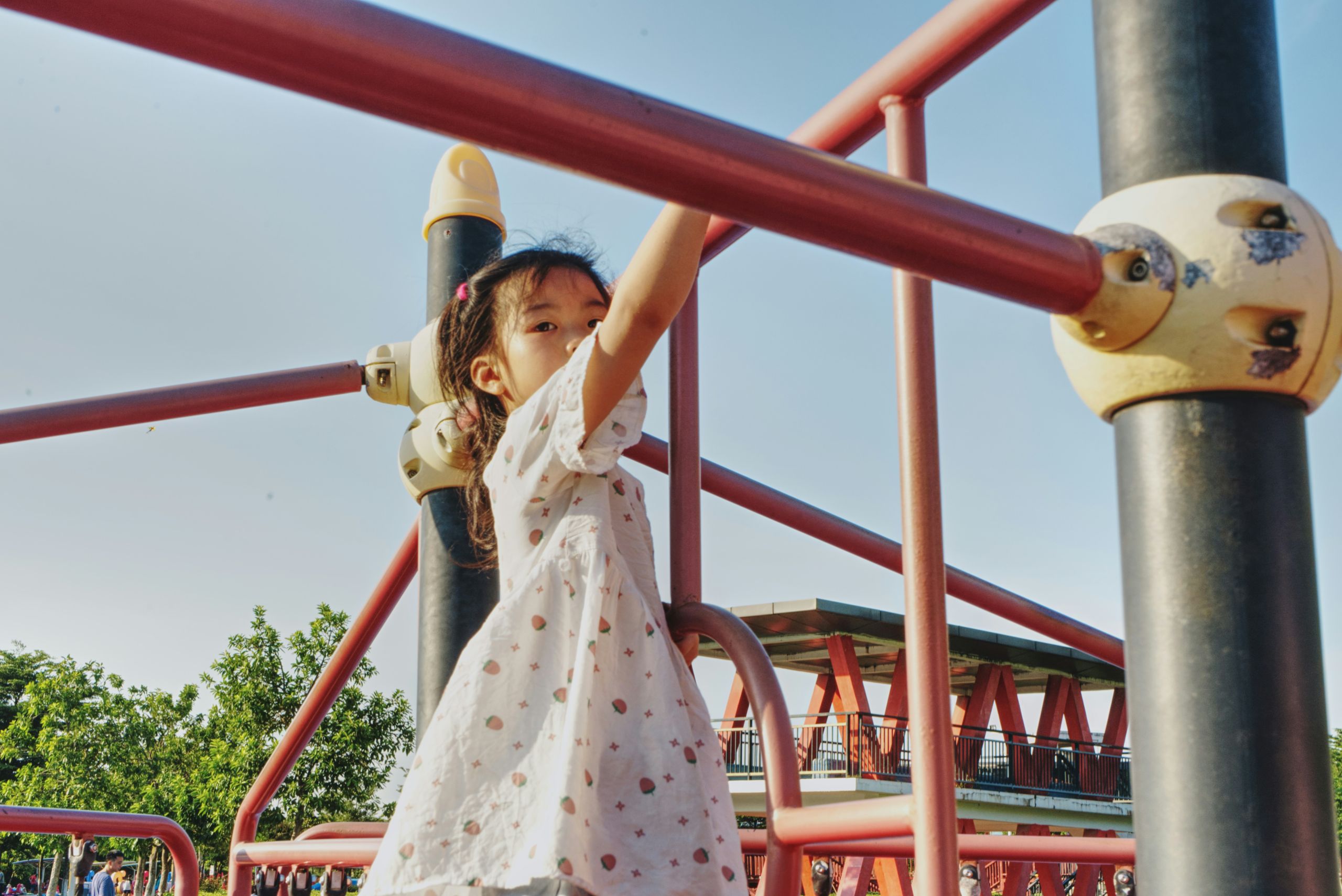
In the world of early childhood and elementary education, risky play is becoming a vital topic. It isn’t about putting children in danger; it’s about providing them the space to take chances, navigate uncertainty, and test their own physical and mental boundaries. Whether it’s roughhousing, flipping, or climbing trees, these are the moments where our students truly learn how to manage themselves and the world around them.
“Are our constant safety reminders actually standing in the way of our students’ growth?”
What Does Risky Play Look Like in the Classroom and Outside?
In our setting, risky play is defined as thrilling and exciting forms of play that involve a level of physical challenge. As educators, we see this through:
- Climbing heights: Testing balance and core strength on play structures or trees.
- High speed: The thrill of running full tilt, climbing a jungle gym, or playing a sport during recess.
- Rough and tumble play: Wrestling and play-fighting within limits that help students understand physical boundaries and social cues.
- Disappearing/Exploring: Giving them the trust to explore a supervised “wild” patch of the playground where they feel independent.
The goal isn’t to create hazards, but to give students the dignity of risk, the chance to manage a situation themselves.
Why We Need to Embrace the “Scary” Moments
While watching a student jump from a high place on the climber might make our hearts skip a beat, that moment is incredibly powerful for their development. Risky play serves as a training ground for life in several key ways:
1. Mastering Self-Regulation and Fear
When students engage in risky play, they experience a mix of fear and excitement. By navigating these feelings, they learn to regulate their emotions. They learn what it feels like to be uncomfortably challenged and how to push through that feeling to achieve a goal, a skill they will need every time they tackle a hard math problem or a difficult social interaction.
2. Cognitive Development and Problem Solving
Every time a child decides which branch is strong enough to hold them, they are engaging in complex, real-time problem-solving. They are assessing their environment, calculating probabilities, and making split-second decisions. This builds a foundation for the critical thinking we strive to see in our academic lessons.
3. Physical Literacy and Body Awareness
Risky play allows students to learn how their bodies move and how to control them. They develop better coordination, balance, and spatial awareness. By testing their limits, they gain a realistic understanding of what they can and cannot do, which actually makes them safer and more confident in their physical abilities.
4. Mental Health and Lowering Anxiety
Ironically, shielding students from all risk can lead to higher levels of anxiety. Risky play prepares them for the real world by teaching them that they are capable of handling uncertainty. When they successfully navigate a risky situation, their self-efficacy soars.
“Supporting risky play doesn’t mean we stop supervising; it means we change how we supervise.”
How We Can Support Risky Play (Without the Stress)
Supporting risky play doesn’t mean we stop supervising; it means we change how we supervise.
- Change Your Language: Instead of the reflexive “be careful,” try phrases that encourage mindfulness. Ask, “What is your next move?” or “Do you feel stable there?” This puts the cognitive work back on the student.
- Distinguish Between Risk and Hazard: A risk is something a child can see and choose to navigate (like a steep hill). A hazard is a hidden danger they can’t see (like a broken piece of glass or a loose bolt). Our job is to remove hazards so they can safely engage with risks.
- Reflect on Your Own Comfort Zone: We all have different fear triggers. By reflecting on our own relationship with risk, we can ensure we aren’t passing our personal hesitations onto our students.
- Express Your Thoughts Out Loud: Narrate what you see to help them build their own internal compass. “I see you’re holding on tight with both hands,” or “You’re thinking carefully about where to put your foot.”
- Jump In and Model: Don’t just be a spectator. Engage in the rough play, help them build the fort, and show them that exploring limits is a natural, joyful part of learning.
Final Thoughts
The real world our students will graduate into is full of uncertainty. By allowing them to climb, jump, and tumble today, we are giving them the resilience and confidence they need to be capable adults tomorrow.
If you want to see a great visual breakdown of these concepts to share with parents or colleagues, check out this great graphic on risky play.
Resources
Please login or register to claim PGPs.
Alternatively, you may use the PGP Request Form if you prefer to not register an account.