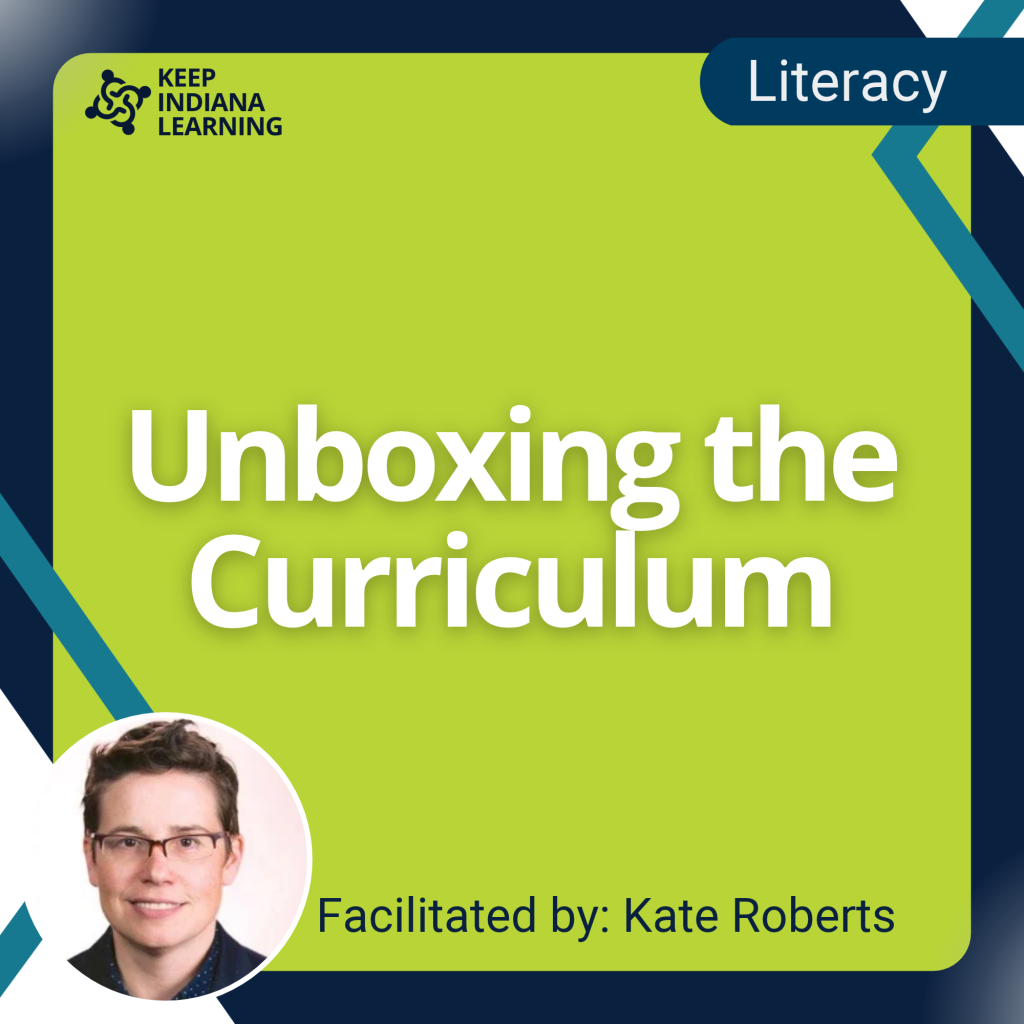
Unboxing the Curriculum Workshop
A practical half-day for teachers who want to make their curriculum work — without throwing it out or starting over.
You were handed a curriculum. Maybe you chose it, maybe you didn’t. Either way, you’re the one standing in front of the students, and you know that what’s on the page and what your kids actually need aren’t always the same thing.
This day long workshop with Kate Roberts—author of Unboxing the Curriculum – offers a practical, step-by-step process for making any curriculum—packaged, prescribed, or homegrown—work for the real students in their classrooms. You will survey a unit to see what it is actually asking you to teach, identify what matters most for your specific students right now, and make the small, deliberate adjustments that create space for learning to actually happen. You don’t have to do a full rewrite. No starting over. Just clearer priorities, a more honest pacing chart, and a stronger sense of what you are teaching and why.
Teachers who attend leave with a (started) revised pacing chart for an upcoming unit, a set of tools they can return to every time a new unit begins, and language for discussing curriculum needs with colleagues and coaches.
This workshop is for administrators, coaches, and classroom teachers at any grade level or subject area who are working with a curriculum they did not write, one that feels crowded or misaligned with their students, or one that looks great on paper but isn’t landing the way they hoped. It is also for educators who have been told to implement with fidelity and aren’t quite sure what that means for the kids sitting in front of them.
Mark your calendars
April 5, 2027 from 8:30 – 3:30 EST at CIESC
- 8:30 - 3:30 ESTIn-Person at CIESC
Opening: What Does Your Curriculum Promise?
We begin by looking honestly at what a unit is asking teachers and students to do — and what the gap between that promise and classroom reality usually looks like. Participants survey an upcoming unit using a simple three-part inventory: skills, content, and habits.
Reading Your Students: Prioritizing What Matters Most
With the inventory in hand, participants use three lenses — relevance, significance, and transfer — to identify what to teach deeply and what to cover lightly. This section includes a brief look at using existing data to inform priorities without drowning in it.
Adjusting the Logs: Mapping a Revised Pacing Chart
Participants reshape their pacing charts using a keep/move/cut framework, creating space for the priorities they have named. This is hands-on work time with coaching support.
Making It Stick: Tools for Sustaining the Work
We close by building a small toolkit — a strategy cheat sheet, a learning progression, or a set of shared agreements with colleagues — that participants can return to every time a new unit begins.
Closing Reflection and Q&A