
Read to Me, Read With Me: The Reading Science Behind Read-Alouds
Written by: Erin McNeill
As a teacher of high school English learners, I had an eclectic mix of reading levels, based on how well students were speaking and learning English. Several of my students were reading at grade level, some were reading at a middle school level, and some were just beginning to read English. I wasn’t sure how to teach them to read as a whole group with so many differing levels, so I grouped them using the novels or stories they were reading for their English Language Arts classes, gave them a metacognitive bookmark from Schoenbach, Greenleaf, and Murphy’s Reading Apprenticeship, and asked them to read aloud to one another stopping periodically to discuss one of the questions on their bookmarks. I joined each group during the period and took my turn reading and discussing the text with them. After a few weeks, they loved reading groups, and their literacy skills and test scores increased by the end of the year. My reason for creating reading groups and asking them to read aloud and discuss the text was to help them practice the four literacy domains assessed on their yearly WIDA test: reading, writing, speaking, and listening. What I didn’t yet understand was the evidence behind reading aloud.
Classroom Read Alouds Matter
As Burkins and Yates remind us, “you didn’t simply read the words on this page, you said them ‘aloud’ in your head” (2021, p.16). We turn written words into spoken language in our brains to comprehend them. This process is called orthographic mapping, and is why we teach word sounds to beginning readers. To further prove this point, Hulme & Snowling state, “At a cognitive level, difficulties in learning to read appear to be predominantly caused by deficits in underlying oral language skills” (2013, p.1). Hearing words is an important step in learning and reading new words. When students hear new words, “they are likely to pick up reading skills more quickly and easily,” according to Jessica Logan, who authored the million-word gap study. This study found that “Young children whose parents read them five books a day enter kindergarten having heard about 1.4 million more words than kids who were never read to.” If students are not hearing words at home, they need to hear them in the classroom. Hearing words aloud helps students as they learn to read.
There are several studies that highlight the practice of teachers reading aloud in the classroom. The International Literacy Association shares some great activities for integrating read-alouds in content areas. It reminds educators that “Read-alouds are just as important for middle and high schoolers (in every subject) as they are for younger kids.” However, in my role, I don’t often see read-alouds at the secondary level. Read-alouds are a great way for educators to share the cognitive skills they are using to make sense of a text. As Math teachers say, “Show your work!” Reading teachers can show their work using read-alouds and explaining how they make meaning in a text.
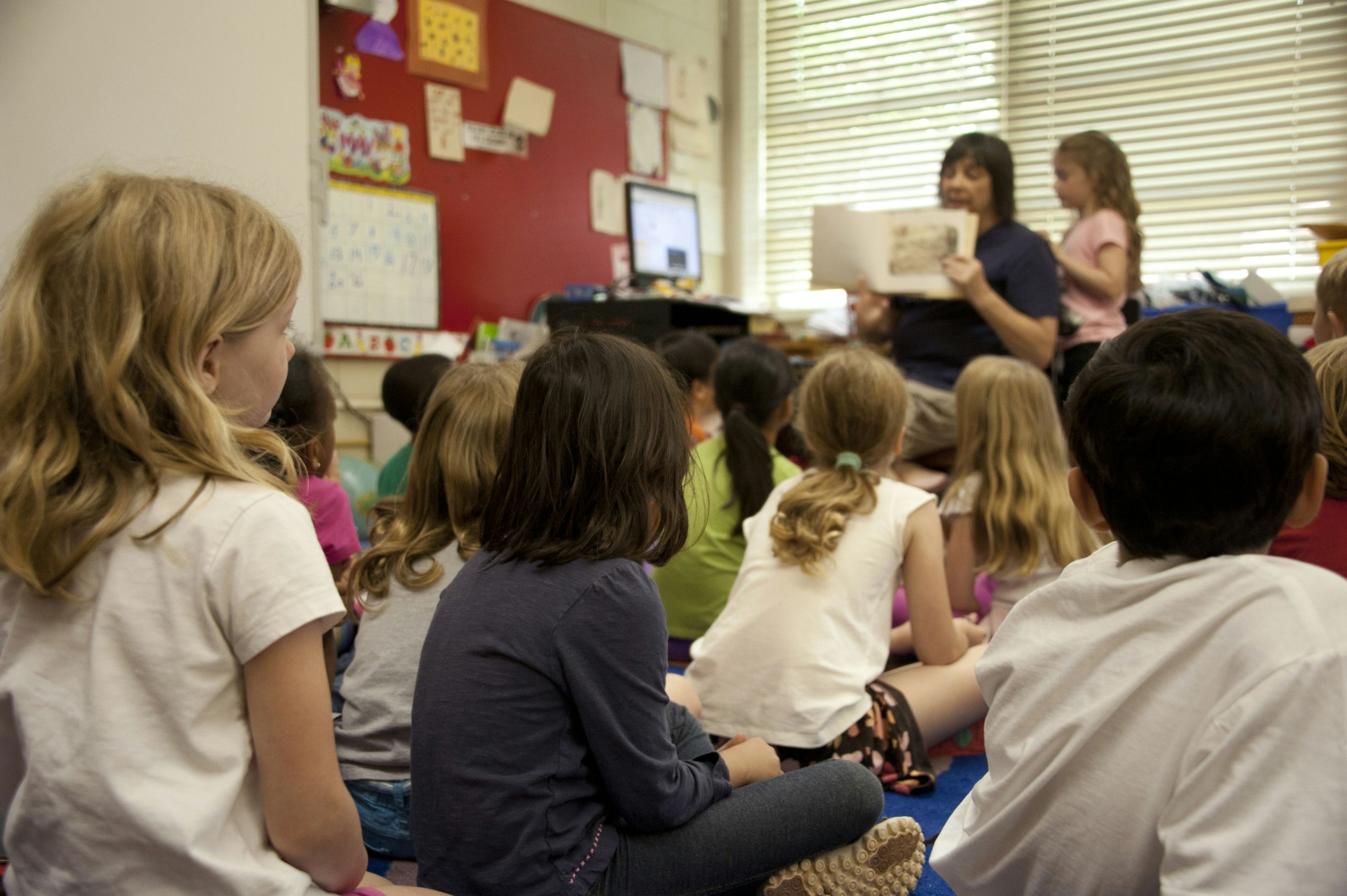
Colette Huxford has some great ideas to incorporate read-alouds on our Home Grown Blog, “The Power of the Read Aloud at the Secondary Level.” She reminds us that “the Read Aloud is a perfect fit for the secondary setting to contribute to reading success. At the secondary level, fluency, vocabulary, and comprehension are key to learning, in any content area, and the Read Aloud can fit in at every grade level and every subject area.” During a read-aloud, students hear new vocabulary words and a model of fluent reading. They also learn comprehension skills as the reader stops and asks questions about the text, explaining how they understood the text and found evidence to answer the question.
“Reading teachers can show their work using read-alouds and explaining how they make meaning in a text.”
Reading as a Formative Assessment Tool
Using small reading groups and asking students to read aloud to one another and discuss the text allows teachers to join groups of students, and become “a student of their students,” following Freire’s (1970) approach to center learners in a dialogue-based approach where teachers and students talk about learning collaboratively to make learning relevant and effective. This approach is also possible in reading instruction if we allow students to read together, with teachers as members of small groups, and to learn from one another. Murphy et al. (2017) remind us that “small-group, text-based discussions are a prominent and effective instructional practice,” and they also help us understand students’ reading struggles and successes.
“Listening to children read aloud provides essential information about how they approach the task” (Bates & Malloy, 2024, 66). Therefore, students reading aloud while their teacher listens can serve as a formative assessment tool. As I read with and listened to groups in my classroom, I was struck by how much I learned about their reading difficulties and progress. As a formative assessment, listening to students read can provide information about word and morphology knowledge, fluency, and comprehension. It can also provide time to practice reading and thinking aloud, allowing students to discuss their reading progress or difficulties.
Small group read-alouds can also boost confidence. Many of my English as a New Language students were hesitant to speak aloud or read aloud before we started this practice. As they practiced reading and discussing daily, their participation and confidence grew. Students felt comfortable with their groups and reported enjoying the shared experience of learning new words and making sense of a text together. We spoke consistently about the need to teach ourselves to read new words, as it is not a natural process.
Additionally, my students recognized the importance of hearing words aloud rather than reading silently or listening to audiobooks. By hearing the words aloud, they could repeat words and sound out word parts. There was a consistent opportunity to learn new words and word parts as we read aloud together.
“During a read-aloud, students hear new vocabulary words and a model of fluent reading.”
As you plan your next reading lesson, please remember the importance of collaborative read-alouds. The Meadows Center’s (2016) list of key reading practices for middle and high school students includes, “Students have opportunities to work purposefully in collaborative formats with peers as they read, write, and talk about content area texts.” In a time when reading instruction is often focused on programs, pacing guides, and assessment data, it is important not to lose sight of the power of collaboration in literacy learning. Small-group read-alouds create meaningful opportunities for students to practice reading, build confidence, learn new words, and make sense of texts together.
Resources
Please login or register to claim PGPs.
Alternatively, you may use the PGP Request Form if you prefer to not register an account.