
The Anatomy of a Data Card: Moving from Inspiration to Implementation
Written by: John "Jack" Hesser
In my last post, I shared how moving data off the classroom walls and into the hands of my middle schoolers changed our culture from “I’m bad at math” to “I’m owning my growth.” But as educators, we’ve all seen “great ideas” wither away because they were too much effort or too complicated to maintain.
If Data Cards are going to work, they can’t be another administrative burden. They have to be integrated into your scope and sequence. Here is the practical roadmap for making Data Cards a sustainable, high-impact reality in your classroom or school.
A Simple Card
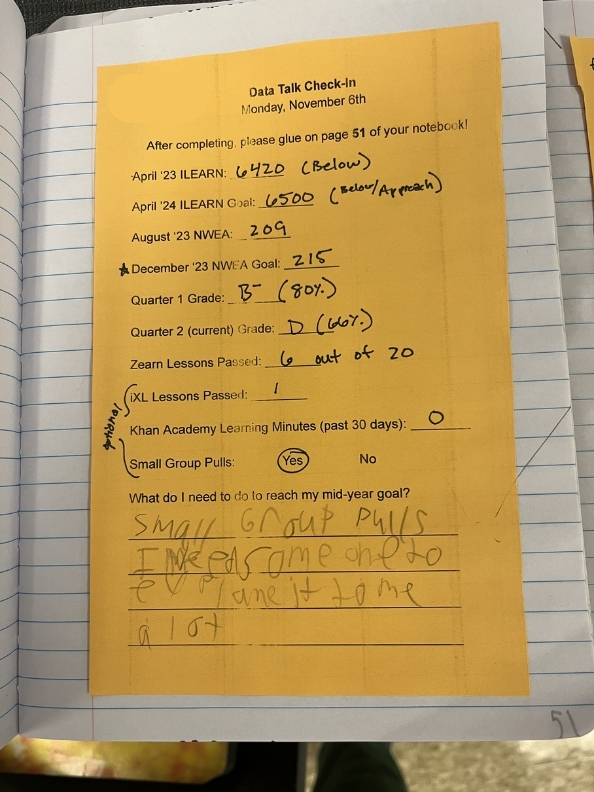
Keep it simple. If it’s too cluttered, students will tune out. I recommend using a half-sheet of colored cardstock (it’s harder to lose and feels official). I also recommend keeping the cards in your classroom so you can reference them whenever, and there’s even less chance of them getting lost. Your card should include:
- The Big Goal: A space for their year-end target.
- The Benchmarks: 3 or 4 slots to record scores from state or district assessments throughout the year.
Optional additions include:
- The “Why” Space: A small area for a qualitative goal (e.g., “I want to feel confident in long division”).
- The Reflection Log: Small boxes for the date and a strategy check-in. This can also be done in a separate place if the card starts to get too busy.
Finding Time in a Packed Schedule
The biggest pushback I hear from teachers is: “When am I supposed to meet with 30 (or 150) students?” While the initial goal-setting meeting might take 5 minutes, the quarterly check-ins should only be 90 seconds to 2 minutes. This is not a long conference. You are having a brief, 1-1 check-in on their goals to ensure the students know that you see them, and you’re on the same page. Don’t overcomplicate the conversation and stick to:
- Do you feel on track to hit your goal? (This measures their confidence and awareness).
- Does your current grade reflect what you’re actually learning? (This measures their honesty about work habits).
Some ways to incorporate this sustainably include:
- Station Rotation Days: While students are working in small groups or on an intervention program, pull one student to your “Data Desk.”
- Independent Work Time: Meet with students during independent practice.
- Do Now/Bell-Ringer: Use the time students are working on their warm-up
“When we use both a grade and a Data Card, we provide a more holistic view of the learner that neither number can capture alone.”
Separating Grades from Mastery
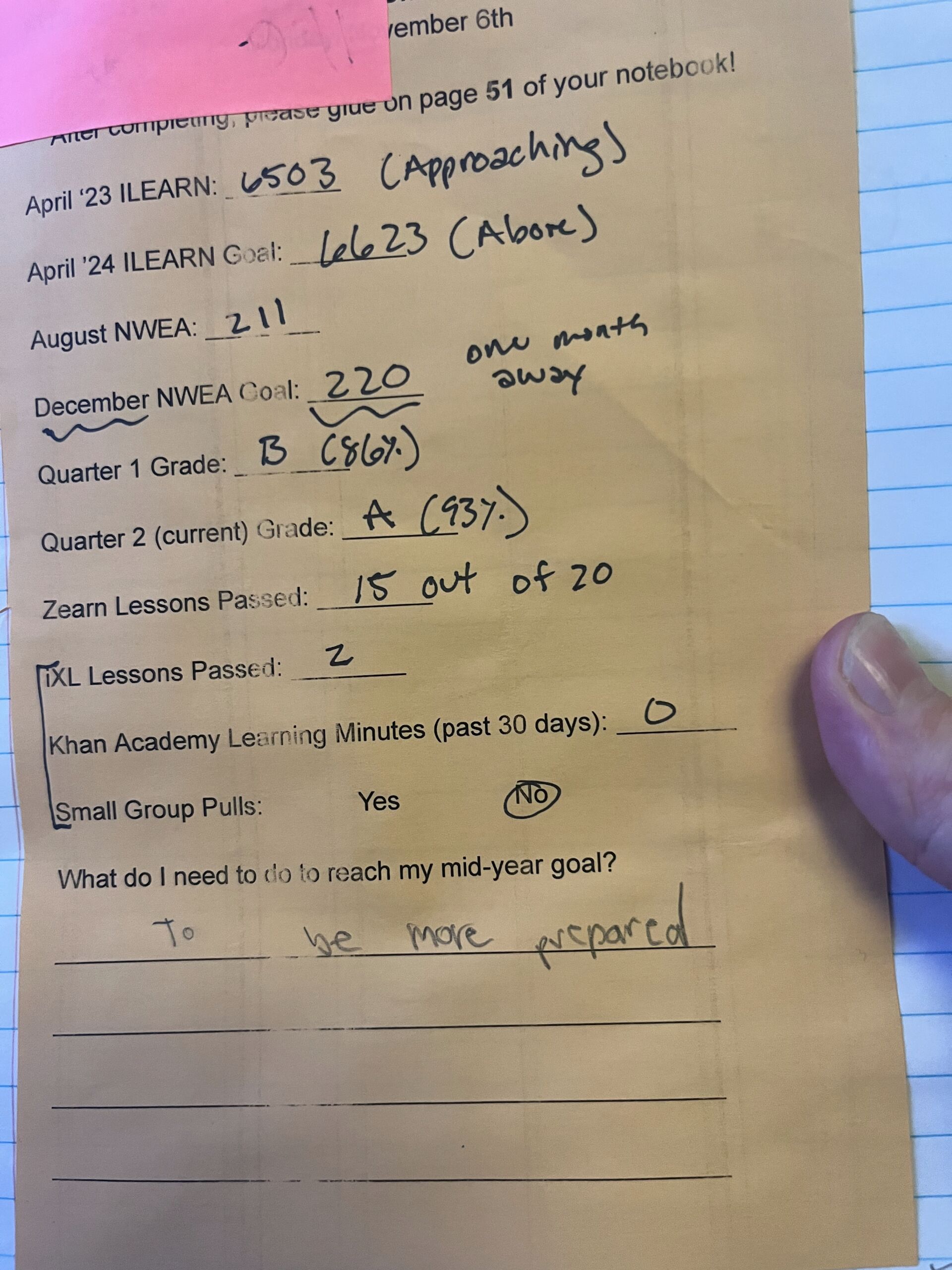
One of the most powerful realizations my students had was that a grade and a mastery score are two different, yet both important, pieces of information. I want to be clear: I believe grades can and should reflect some level of effort, organization, and participation. Those are skills that students need for life. When we only look at the grade, however, we sometimes miss the full story of a student’s academic health. By looking at the Grade and the Data Card side-by-side, we can identify exactly where a student needs support.
When we use both a grade and a Data Card, we provide a more holistic view of the learner that neither number can capture alone. Consider the student earning a “B” because they are organized and compliant, yet their Data Card reveals they are still performing below grade level; for them, that “B” is a comfort zone that might mask a need for more rigorous growth, and the data provides a healthy friction they need to push further. On the flip side, we all have students who have a strong grasp of the academic content but with lower grades. For them, the Data Card is a powerful confidence builder, proving they aren’t bad at math; they simply need to bridge the gap between their mastery and their habits. By honoring the grade as a measure of responsibility and the Data Card as a measure of skill, we can have honest conversations that help every student identify exactly what they need to work on next.
“Data Cards are not about the paper. They are about the intentionality of the relationship.”
A Note for School Leaders
If you are a coach or administrator looking to scale this, remember: Compliance kills culture. If you mandate that every teacher use Data Cards by Friday, they will become a “sit it and forget it” tool. Instead:
- Remove Barriers: Don’t just ask them to do it, print the cardstock for them. Provide the guided notes templates for the initial growth lesson.
- Protect the Time: If you want teachers to have 1-1 conferences, give them a “Data Day” once a quarter, where the library is open or a sub is available to cover classes so they can meet with their kids.
The Bottom Line
Data Cards are not about the paper. They are about the intentionality of the relationship. They give you a reason to sit next to a student, look them in the eye, and say, “I see where you are, I see where you’re going, and I’m going to help you get there.”
When we give students the tools to see their own progress, we aren’t just teaching them math or reading; we are teaching them that they have the power to change their own trajectory.
Resources
Please login or register to claim PGPs.
Alternatively, you may use the PGP Request Form if you prefer to not register an account.