
15 Ways to Use Play-Doh to Increase Student Engagement in Middle & High School Classrooms
Written by: Carrie Wisehart
Table of Contents
- Play-Doh Check for Understanding Activity
- Play-Doh Vocabulary Matching Game
- Kinesthetic Brain Engagement
- Process Play-Doh
- Time-line Play-Doh
- Reconstruction
- Model
- Gallery Walk
- Game of Bowling
- Sculptionary Review Game
- For Kinesthetic Students
- YOU create the sculpture!
- Mapping
- Living Comic Strip
- Show and Tell
Key Takeaways
- Something as simple as a can of Play-Doh can allow students to engage with a subject matter in whole new ways.
- Hands-on activities can be a part of every stage of the learning process—from unit kick-off to mid-lesson checks for understanding to end-of-unit assessments.
- Thinking artistically is not only for the art room; students can think differently about every subject by using hands-on supplies.
As a high school teacher and administrator of 24 years, I have found we spend so much time preparing students for the future – pushing them to prepare for college or trade school or the military or work – that we forget one very important thing: high school students are STILL KIDS.
Rigorous learning CAN STILL BE hands-on, collaborative, and fulfilling. Academic content is only enhanced by the use of creative vehicles: tools to create, synthesize, and assess strategies that create better student engagement! It also gives students the opportunity to design, build, and invent without “one right answer”, promotes cooperation, and can help many students focus and regulate their emotions! Let’s be real: it also makes learning feel fun, which often leads to better participation and willingness to complete the activity or assignment.
Students JUMP at the chance to use Play-Doh in the classroom. They love the “throwback” to their childhoods as well as getting to use their hands. The minute the Play-Doh came out in my AP English Language classroom, the students reverted immediately to their elementary days. It is important to note that CREATE is at the TOP of Bloom’s Taxonomy. When students are forced to synthesize what they’ve learned and make a sculpture, they are doing some crazy critical thinking. Play-Doh is a great way to keep students engaged, let them use their hands, employ creativity, and YOU can have a new and different form of assessment that is actually FUN (did I just say FUN in the same sentence with ASSESSMENT? Mind = blown).
Play-Doh – especially the kind that lasts – can be expensive. If you don’t know how to get enough Play-Doh, you can put it on your syllabus as an optional item for parents and students to donate. I also added some Play-Doh packs to my Amazon Wish List in the fall. Parent Night is a great time to advertise your Play-Doh engagement strategy. Students and parents are so excited about the possibility of Play-Doh that many of them bring in more than one tub! I have compiled a list of 15 Play-Doh activities I used in my Language Arts, AP English, and World Studies (PBL English/World History) classroom. But these activities are broad enough that they can be used in many classrooms at both the middle and high school level. These activities can relate to any reading assignments, vocabulary attainment, and/or reflection on topics that require student assessment. Play-Doh is a simple, hands-on strategy that engages students in learning at increased levels!
Feel free to use all the ideas listed below, but if you’d like the handouts, click this link!
“Academic content is only enhanced by the use of creative vehicles: tools to create, synthesize, and assess strategies that create better student engagement!”
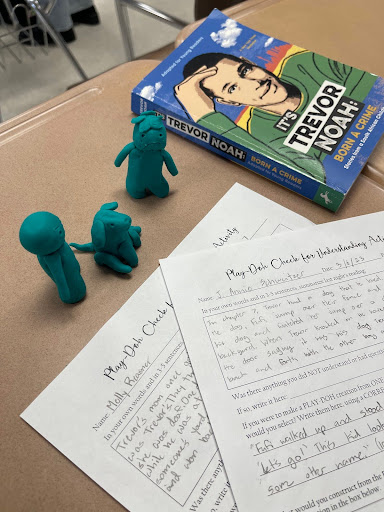
1. Play-Doh Check for Understanding Activity
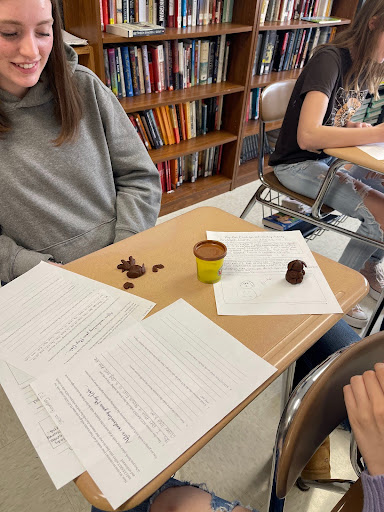
This activity is a way to assess the reading the students have done for homework. Students summarize the chunk of reading and then choose a section to create a Play-Doh sculpture. After the Play-Doh construction, students work with partners to reflect on what they chose to construct and why. This activity is great for any subject area that requires students to comprehend and apply reading.
2. Play-Doh Vocabulary Matching Game
The teacher directs the students to ten vocabulary words he/she would like them to learn and/or reflect on. From those words, students can either be assigned or choose their own word to write a sentence in context and create a sculpture that best reflects that word. Students write their words and definitions or sentences on paper and play a “matching game” with other students from the class, matching the correct word to the sculpture. A great formative assessment or review game. Also a great way to review words that students need to remember for content work.
3. Kinesthetic Brain Engagement
One of the common assessments used by English teachers is a Socratic Seminar. One type of Socratic Seminar is called the “Fish Bowl”, when one group of students is in the center having a discussion, and the rest of the students are listening and taking notes. Often, I’ve noticed the outside circle of students is not engaged in the class discussion. A great way to use Play-Doh is to ask students to create a sculpture related to the discussion and explain how and why that sculpture applies to the class discussion OR class lecture.
4. Process Play-Doh
Have students use Play-Doh to artistically represent a process. Some great examples of processes across the curriculum would be: water cycle, photosynthesis, cellular respiration, gravity, melting/freezing, voting, and elections.
5. Time-line Play-Doh
Have students create a timeline (or this handout could also be used for the process) by placing a small Play-Doh sculpture in each of the five boxes on the handout. It is always good to have students explain their sculptures to someone else in a reflective activity.
6. Reconstruction
Students can reconstruct a location from a certain time period or a setting from a story. They can use clues from the text to make the construction. This can be used in most subjects with an emphasis on text evidence.
7. Model
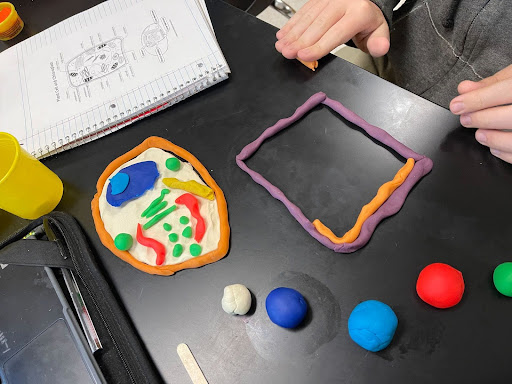
In Science classes, students can create models of cells, etc. In History, students can create models of inventions or historical objects of importance. In English, models can be made of the writing process or symbols used in writing. In math class, students can make models of a story problem, or even create a graph out of Play-Doh, just to give them the opportunity to look at things differently than the way they usually do.
8. Gallery Walk
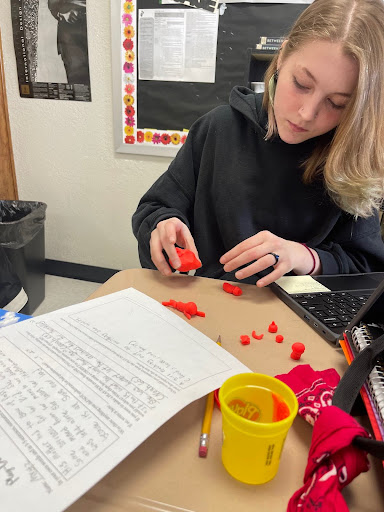
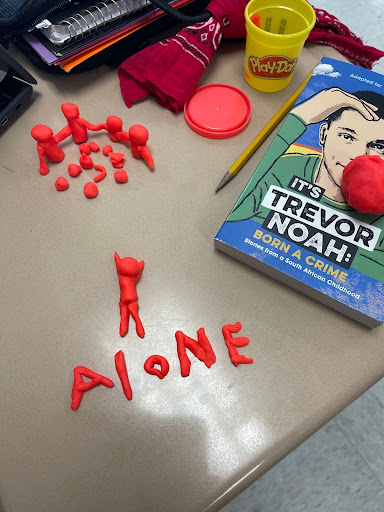
With any of the activities you do with Play-Doh, it is always great to have students do a gallery walk. You can use the critical thinking questions on the handout attached, or you can come up with your own. Gallery walks turn learning into a “walk through museum” where students actually move, think, and talk instead of just sitting and listening.
9. Game of Bowling
Students create bowling pins and bowling balls from Play-Doh. Develop a list of questions based on how many “pins” a student knocks down.
10. Sculptionary Review Game
Based on the game Pictionary, make slips of paper with vocab or terminology on them. Place the students in teams or partnerships and have them draw the term. They have 30 seconds to 1 minute (you choose) to create that sculpture and see if the other students on their team can guess what the sculpture is.
11. For Kinesthetic Students
For kids who have trouble sitting still (your tappers, clickers, and noisemakers), make Play-Doh an option. Obviously, set rules for how and when they can use it, but if you need someone to keep their hands busy, make Play-Doh available whenever they need it. At the beginning of the year, I always have my students take a learning styles quiz, so I know who is kinesthetic (more and more every year).
12. YOU create the sculpture!
Why should the kids have all the fun? Make a sculpture or sculptures for a bell-ringer. Have the students identify what the sculpture is and how it is related to yesterday’s class or last night’s reading. It is always a great way to engage students with your amazing sculpting skills – while still connecting them to the previous day’s learning!
13. Mapping
If you are using a map for any reason, Play-Doh is a great way to “emphasize” certain locations by adding little sculptures that identify what happened in that particular location or what important event happened there. This can be used in foreign language classes, History courses, and even ecological studies.
14. Living Comic Strip
Students can take parts of a story, chapter, and/or section and create a living comic strip complete with dialogue bubbles and captions. You can copy the handout as many times as needed. Students will probably prefer to make their own comic strip so it fits their own comic. Living Comic Strips can be used to summarize, retell a story, create an alternate ending, show theme or conflict and resolution, solve word problems…the list goes on and on!
15. Show and Tell
When students come back from a break, instead of having them share what they did over the break, have them sculpt it. A great back to school activity.
Student reflections about Play-Doh activities:
- “It makes learning fun, which I think leads to better learning.” – Molly R.
- “It makes you think, plus the chapter will most likely stick with you more.” – Mystic B.
- “It shows we should be allowed to be creative in school.” – Bradynn R.
- “The benefits of this activity is that we got to do hands-on learning while also socializing and reflecting…” – Jack L.
- “It’s fun to work with your hands because it engages you more. And I like Play-Doh and being creative.” – Claire W.
“It also makes learning feel fun, which often leads to better participation and willingness to complete the activity or assignment.”
If you have any additional Play-Doh ideas, I would love to hear from you! As a classroom teacher, I was always looking for new and exciting ways to increase student engagement. Helping students embrace their curiosity, creativity, and just plain fun helped my job be more satisfying and rewarding each day. As a principal, I love seeing my teachers get outside their comfort zones and try new things – challenging themselves and their students. Rigor doesn’t have to mean desks in rows with worksheets. Rigor can be fun activities that require students to demonstrate understanding and communicate their thinking!
Resources
Please login or register to claim PGPs.
Alternatively, you may use the PGP Request Form if you prefer to not register an account.