
Your Superpower Is Hidden in the Language of Play
Written by: Lynn Bowman
If you ask most early childhood educators why they do what they do, you’ll often hear: “I want to make a difference in children’s lives.” And that’s true, but the most magical, powerful learning moments aren’t always found in perfectly planned lessons or worksheets.
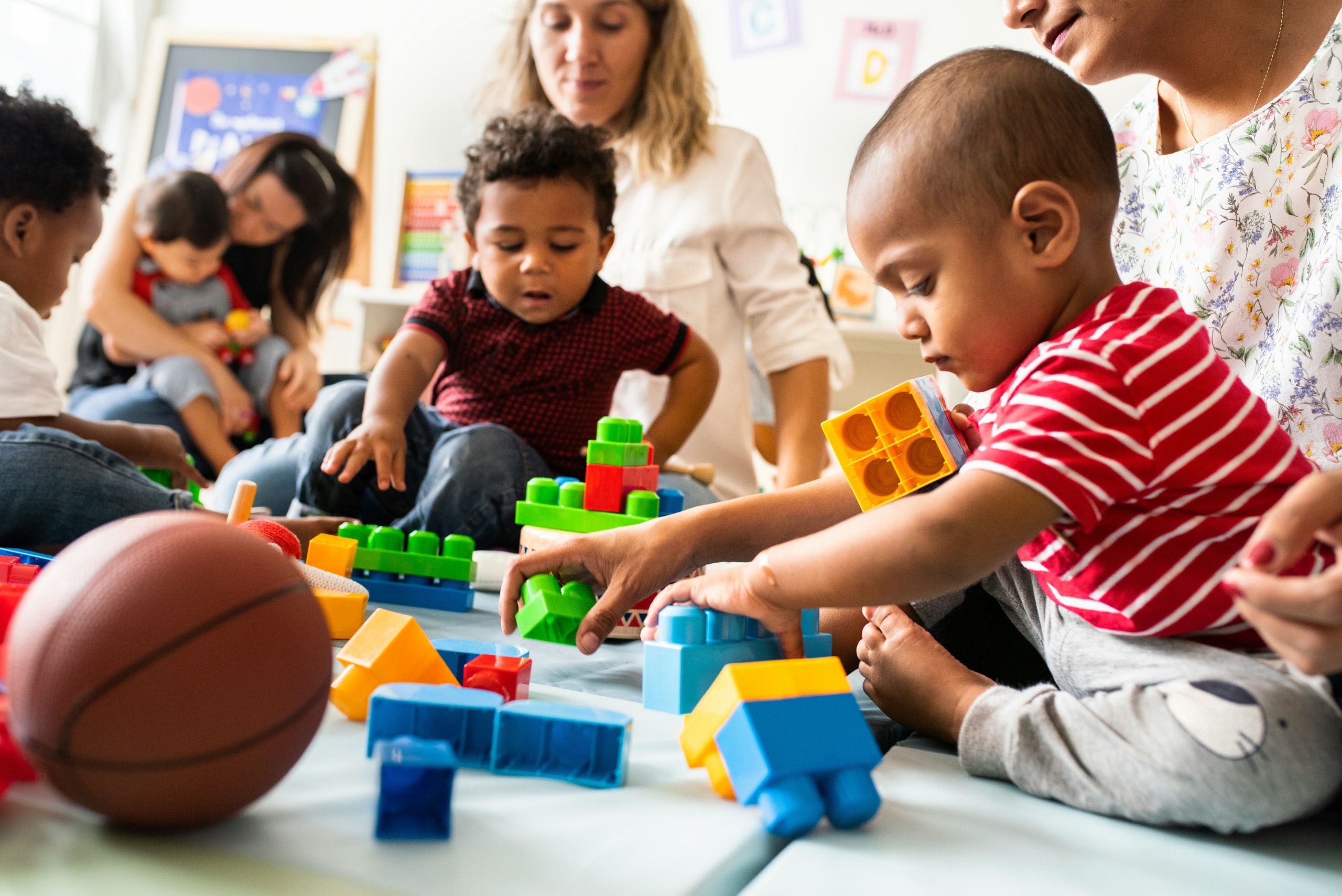
Sometimes, they happen in the in-between moments, the giggles, the block towers, the imaginary kingdoms. These are the moments where play becomes a language, and when you learn to “listen,” it can unlock a child’s potential and reveal your own hidden superpower as an educator.
“Play is the secret curriculum that teaches curiosity, problem-solving, collaboration, and self-expression.”
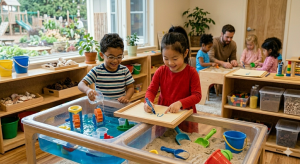
Whether you’re stepping into your first classroom or your fifteenth year, here’s one of many important truths. Play is the secret curriculum that teaches curiosity, problem-solving, collaboration, and self-expression. And yes, you, the teacher, hold the keys to unlock it.
For novice teachers, play can feel chaotic. You might ask yourself, “Am I really teaching if I just let them play?” Veteran teachers might see it as routine or just what children do. But here’s the secret. Play is where real learning happens.
Through play, children solve problems by stacking blocks, experimenting, and building. Build social-emotional skills by sharing, negotiating, and learning patience. Develop language and communication through storytelling, asking questions, and explaining ideas. Express creativity by inventing games, imagining worlds, and exploring possibilities.
When you watch closely, you’ll see patterns and cues that tell you what children need, what they’re ready to try, and where they thrive. Suddenly, every dress-up corner, block area, or outdoor activity becomes a goldmine of insight and opportunity.
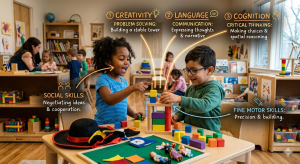
Play is like a secret code. The best teachers become fluent in it without ever interrupting children’s learning. Ask yourself, what activities are your children naturally drawn to? Their interests can guide your planning and help you meet them where they are.
One secret code is problem-solving. When a child experiments, adjusts, or tries again after a mistake, celebrate their ideas as they work their way to finding a solution. Another powerful secret of play is collaboration. Encourage children to share ideas, solve conflicts, and work together. You can tap into this through language and storytelling by actively listening to how they describe what they’re thinking, feeling, and discovering.
Novice educators should embrace the chaos. With you being new, you might feel unsure about letting children play freely. That’s normal. But here’s a tip. Lean into the chaos, it’s your classroom’s greatest teaching tool. Observe first, guide second. Watch the patterns and choices children make. Ask open-ended questions like: “What do you think will happen if?” or “How could we try it differently?” Document the magic. Track behaviors, interactions, and problem-solving moments. They’re your roadmap for future lessons. Remember, every messy moment is a learning moment, and every little victory in play is a chance for you to coach, inspire, and celebrate.
Veteran teachers should embrace the spark in rediscovery. Even the most experienced teachers can fall into routines that dull the excitement. Instead, introduce mini-experiments. Let children test new ideas, change rules, or create new stories. Blend learning through science, math, and literacy to create imaginative play. Remember, sometimes, the children teach you more than you teach them. Watch closely, and listen intentionally, you’ll learn opportunities to spark curiosity and foster growth everywhere.
Educators are encouraged to rotate materials thoughtfully. This helps create flexible spaces and learning experiences. Allow indoor and outdoor areas to encourage exploration. Mistakes will happen, and that’s a good thing. Use language to celebrate them! A toppled tower or a plan that didn’t work is not failure, it’s discovery and a lesson in resilience. Encourage storytelling. Let children narrate their play. This builds language, sequencing skills, and self-expression. Make reflections and take a few minutes to document what you observed to plan new ways that will extend future learning.
“As an educator, your challenge isn’t just to teach, it’s to see, listen, and amplify the learning hidden in every playful moment.”
As an educator, your challenge isn’t just to teach, it’s to see, listen, and amplify the learning hidden in every playful moment. Your superpower is real. It’s just waiting for you to recognize it in the laughter, curiosity, and endless possibilities of play. So, step back, lean in, and let play show you your superpower. Watch closely, guide gently, and trust in the intelligence and creativity of every child. Every block stacked, every imaginary scenario, every giggle holds a lesson waiting to be discovered.
Resources
Please login or register to claim PGPs.
Alternatively, you may use the PGP Request Form if you prefer to not register an account.