
The Coach’s Role in Meeting Schoolwide Goals
Written by: Jessica Miller
“Alone is hard. Together is better.” That’s the central idea behind Simon Sinek’s book Together is Better. In schools, though, it can sometimes feel like we’re all working in our own lanes. Teachers are focused on their classrooms, coaches are supporting instruction, and leaders are juggling big-picture goals and daily demands. It’s easy to get caught up in the work of our individual roles without always seeing how it connects to everyone else’s. This quote is a helpful reminder that while each of us has a specific role in a school, none of us is meant to do the work alone. Schools are complex systems, with different people playing different parts. But real progress happens when those roles work together toward the same vision—especially when schools are striving toward shared, schoolwide goals.
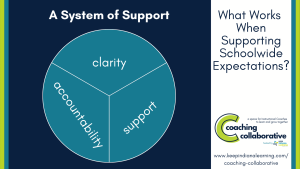
The KINL Coaching Collaborative recently came together to discuss the specific role of the instructional coach when supporting school-wide goals and expectations. At the heart of this conversation was one key point when thinking about new initiatives or expectations: school communities need clarity in what the expectation is, who will support implementation, and how accountability will be ensured. Without clarity in these areas, even the strongest initiatives can lose momentum or result in inconsistent implementation across classrooms.
Too often, instructional coaches are asked to take on all three responsibilities. They attend training and share their learning with teachers (clarity of the expectation), engage in planning meetings and offer classroom support to implement what was learned (support), and participate in walkthroughs or other monitoring practices (accountability). This all-in-one approach places too much responsibility on the coach and ultimately limits their ability to engage in ongoing, focused partnerships with classroom teachers. When coaches are expected to carry clarity, support, and accountability alone, it prevents the shared leadership necessary for sustainable implementation and limits their ability to engage in coaching cycles focused on improving student learning.
So, what might we do to ensure coaches can support schoolwide expectations without being seen as an expert or evaluator of implementation?
Clarifying the Role of the Coach
When the coaching role is unclear—or when coaches are asked to take on actions that fall outside of coaching—they risk eroding the very relationships that make coaching effective. Teachers must feel safe and confident that the coach is there to support their learning, not to judge their practice or evaluate their performance. Trust is foundational to coaching. Without it, teachers may be less willing to take instructional risks, try new strategies, or openly reflect on challenges in their classrooms.
“Trust is foundational to coaching.”
It can be tempting for coaches to agree to activities such as walkthroughs, monitoring implementation, or providing evaluative feedback, especially when schools are under pressure to show quick results. However, each time a coach takes on an accountability role, they blur the lines of partnership. Over time, teachers may begin to see the coach as an extension of administration rather than as a thinking partner. Each move a coach makes must be grounded in a stance of partnership—one that prioritizes collaboration, curiosity, and shared responsibility for improving student learning.
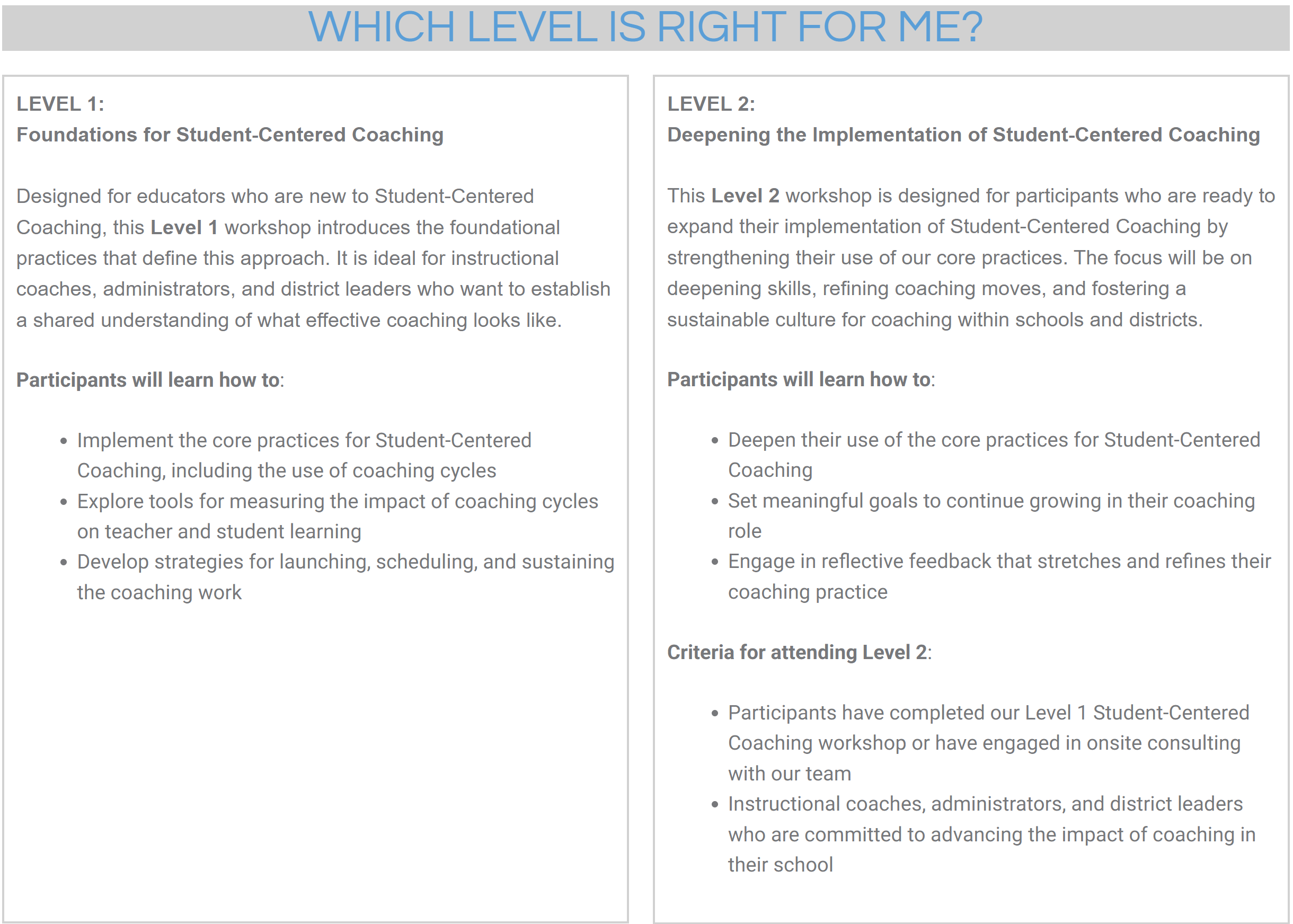
To learn more about defining the role of the coach, check out our Student-Centered Coaching learning opportunities.
Elevate Teams of Instructional Leaders
Instructional coaches are an essential part of any school-wide initiative, but they cannot—and should not—carry that work alone. At Keep Indiana Learning, we frequently see districts sending coaches to content-area professional learning, conferences, and curriculum training with the goal of building their own knowledge and the expectation they will bring their learning back and increase instructional capacity across the school. While there are reasons it might seem to make sense to send only a coach to these learning opportunities, there is one key reason we encourage districts to send teams, not just coaches: coaches cannot be responsible for defining expectations, ensuring implementation, and holding teachers accountable.
When coaches are positioned as the sole holders of expertise, support, and accountability, trust is strained, and true coaching work becomes difficult to sustain. Instead, schools benefit from developing teams of instructional leaders who share ownership of improvement efforts. These teams might include administrators, teacher leaders, department chairs, and classroom teachers who together define instructional priorities, monitor progress, and adjust plans as needed.
One high-impact move schools can make is to send coaches to professional learning experiences alongside teams of teachers or teacher leaders. This sends a powerful message to the school community: we are all learners, and we are all responsible for this work. Coaches and teachers learn together, engage in shared meaning-making, and collaboratively plan for implementation. This approach not only strengthens coherence across classrooms but also builds internal capacity and collective efficacy.
When instructional leadership is distributed, coaches are freed to focus on their most impactful work—partnering directly with teachers to support instructional shifts. This focus ensures teachers have the support needed to meet new expectations or put new initiatives into place because they have a partner in the work. At the same time, leadership teams maintain responsibility for setting expectations, monitoring progress, and addressing systemic barriers. This balance creates the conditions for sustained change rather than short-lived initiatives.
“When instructional leadership is distributed, coaches are freed to focus on their most impactful work – partnering directly with teachers to support instructional shifts.”
Position Coaches as Partners
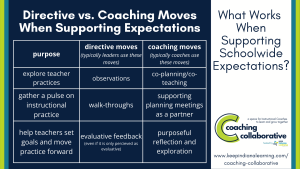
Coaches must be positioned as partners, not evaluators or enforcers. Their role is not to define expectations or hold teachers accountable for them, but to support teachers in bringing those expectations to life. Coaching thrives in environments where teachers feel safe to reflect honestly on their practice, explore new strategies, and learn through trial and error.
So how do coaches support school goals without assuming responsibility for accountability? Through intentional coaching moves grounded in partnership. Coaches co-plan, co-teach, and reflect alongside teachers in coaching cycles. They bring specific instructional practices into planning conversations, ask purposeful questions, and support teachers as they implement new strategies in the classroom. Through reflection, they help teachers examine evidence of student learning, analyze instructional decisions, and identify next steps. (To learn more about putting coaching cycles into practice, check out our Student-Centered Coaching learning opportunities.)
This type of coaching shifts the focus from compliance to growth. Rather than gathering data on whether teachers are implementing the strategy, coaches and teachers work together to analyze the impact of the instructional strategies on student learning and to consider adjustments or refinements that would best support student learning. These conversations build instructional capacity, professional agency, and a culture of continuous improvement.
When coaching is positioned in this way, it becomes a powerful lever for achieving school-wide goals. Coaches are not responsible for enforcing expectations—but they are instrumental in helping teachers develop the skills, confidence, and instructional practices needed to meet them. In this way, coaches create the conditions for meaningful, lasting change—without being placed in roles that undermine their effectiveness or the trust they work so carefully to build.
Moving Forward with Instructional Coaching
When coaching structures are thoughtfully designed, they become a powerful driver of continuous improvement. Clarifying roles, elevating teams of instructional leaders, and grounding coaching in partnership ensures that initiatives are not dependent on a single individual, but instead are supported by a strong system. In these environments, coaches can focus their energy where it matters most—partnering with teachers to refine instructional practice and deepen student learning. Sustainable improvement does not come from placing more responsibility on coaches, but from building collective ownership for instructional growth across the school community.
Resources
Please login or register to claim PGPs.
Alternatively, you may use the PGP Request Form if you prefer to not register an account.