
Relevance Redefined: Helping Students Own Their Learning Journey
Written by: Ashley Johnson
In our last blog, we dove into feedback. However, feedback loses its impact if the students aren’t invested in their learning. For our fourth blog, we will talk about getting students to take ownership of their learning. If students don’t find relevance in the work they are doing, they will not “buy in” to the experience. So how do we get students to “buy in”?
Establish a “Why?”
Students are not so interested in “what” they are doing, but “why” they are doing it. Just like us, they want to know their time is being used in a productive manner.
Think about the last time you were sitting in a staff meeting. Did any of the following thoughts cross your mind?
“When will I use this?”
“Is this worth my time?”
“This could have been an email.”
“I have so many other things I could be doing.”
Students have these same thoughts. They value their time and efforts just as much as we do. By explaining the “why” behind the lessons and projects you assign your kids, you will increase their “buy in” because they see the value in what you have them doing. If you can’t come up with a reason your lesson is valuable to students, then maybe you should change the lesson.
“By explaining the ‘why’ behind the lessons and projects you assign your kids, you will increase their ‘buy in’ because they see the value in what you have them doing.”
Paint the “Big Picture” for your students. Obviously, not everything we do has an instant payoff. This is why it is so important to paint the picture and connect daily lessons to long-term growth for your students. Explain to them that they are building the blocks to success in the future.
Real-World Learning
The closer students can link their learning to real-world experiences, the more connected they feel. But you don’t just need to make the learning real-world, you need to make it real to your students’ world. Students are disconnected when they view lessons as abstract. What are your students’ interests? What are their current life experiences? Connect the dots, and the fireworks of learning will explode.
By including your students’ passions, culture, and everyday experiences, you unlock not just learning, but a love of learning. When students find purpose and voice in what they do, they feel understood and take pride in their work. Students are more likely to engage deeply, take ownership of their learning, and apply their knowledge in impactful ways both inside and outside your classroom.
“Ownership doesn’t just happen, it is built through intentional design that values student voice, relevance, and experiences.”
Design your lessons around what is going on in your students’ lives. Every year around March Madness, I incorporate the basketball bracket into my diversification of stocks lesson. This makes the lesson fun and includes something they are all talking about anyway.
Owning the Learning
Another way to build motivation and engagement is to make sure students take ownership in their learning. When students have a feeling of responsibility for the end product, they take pride and produce better quality work, resulting in stronger engagement and learning.
There are a couple of ways to make sure students take ownership in their learning. First is to give students a choice. Give students a choice board or allow them to come up with their own way to prove they have mastered their content. When students have choice they feel they have more stake and ownership in their learning, resulting in more engagement and “buy in.”
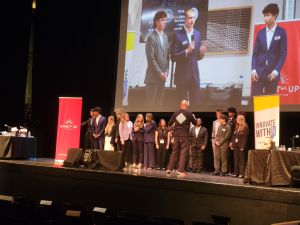
Another way to make sure students feel ownership in their work is to make sure it leaves the four walls of the classroom. Have a showcase, bring in guest speakers and judges, take students out to perform or present their work. When students know more people than you will see their work, they step up their game and take pride in what the public will see.
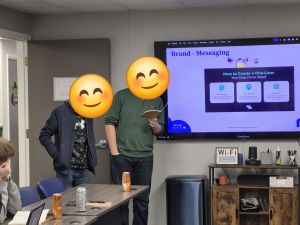
My Entrepreneurship students build their own businesses. They choose what is important to them and build it from the ground up, knowing they can take it with them when they leave, and several have. They interact with community leaders and the local chamber of commerce. They have a “buy in” with this learning, because they chose it and know others will be seeing it.
When students understand the “why,” see the “big picture,” and feel personally connected to the work, learning transforms from a task into a purpose. Ownership doesn’t just happen, it is built through intentional design that values student voice, relevance, and experiences. By creating learning environments where students feel invested, empowered, and proud of what they produce, we move beyond compliance and into true engagement. When students own their learning journey, they don’t just do the bare minimum to get by, they exceed expectations and carry the knowledge they gain beyond the classroom.
Resources
Please login or register to claim PGPs.
Alternatively, you may use the PGP Request Form if you prefer to not register an account.