
Circle Up: Building Trust One Question at a Time
Written by: John "Jack" Hesser
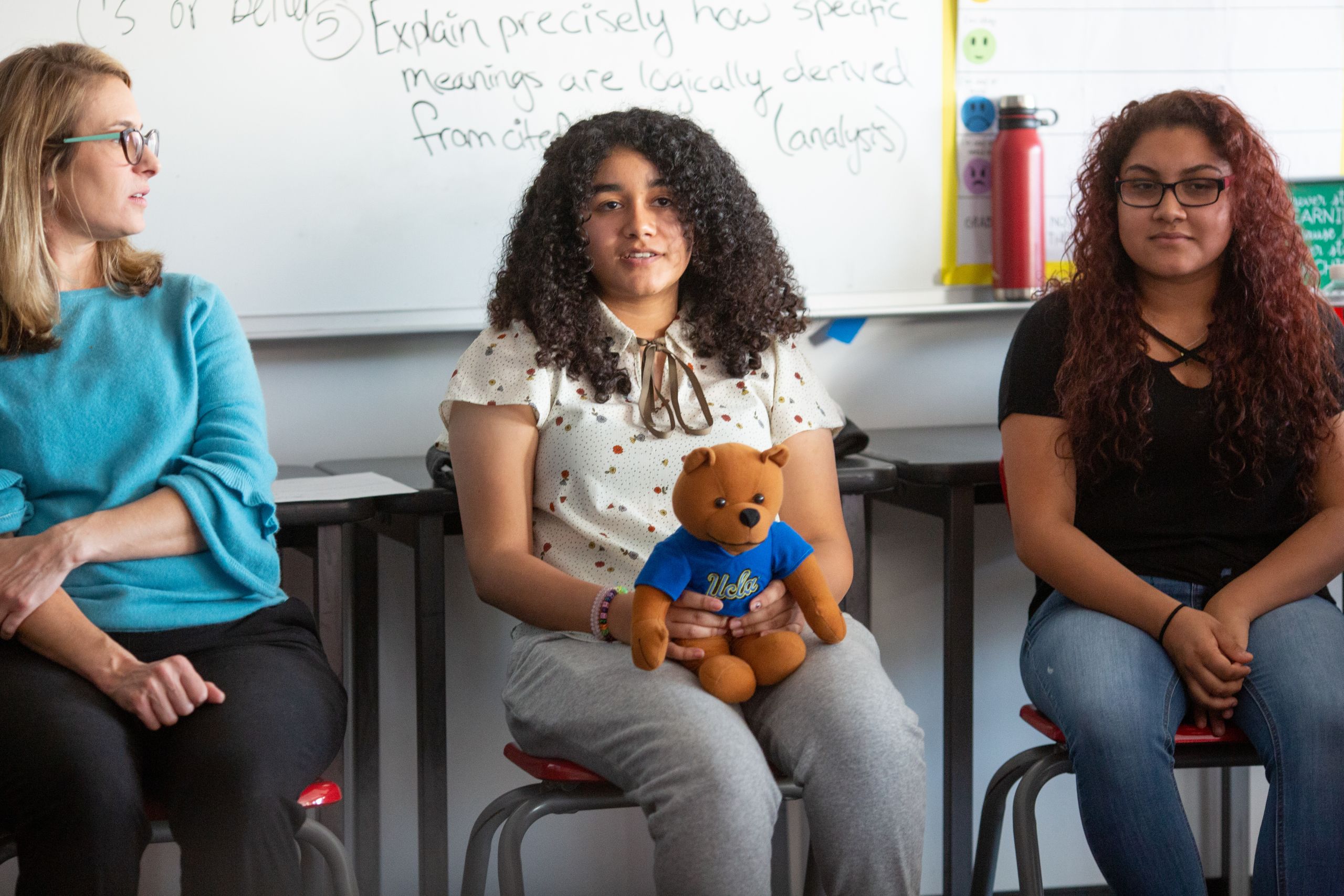
“Circle up!” It’s a phrase students at our school know well. Each week during Advisory, we gather for Community Circles – twenty minutes set aside to pause, connect, and listen. Circles aren’t a new concept, but how we structure them has made all the difference.
In the past, we tried using one big discussion question each week. The idea was simple, but the execution often fell flat. Teachers found that discussions fizzled out after just a few minutes, leaving students disengaged and too much time to spare – which middle school teachers know is a dangerous thing! That’s when we shifted our approach to what we now call building questions – a gradual ladder that helps students warm up to deeper thinking and sharing.
“Circles aren’t a new concept, but how we structure them has made all the difference.”
Low Floor, High Ceiling
 Each week’s circle now follows a short sequence of three questions that grow in depth. We start with a question that has a low floor—something every student can answer, regardless of background, language skills, or experience. From there, the questions build in complexity, creating a high ceiling that encourages deeper reflection and perspective-taking.
For example, one week begins with:
- Would you rather talk to animals or breathe underwater?
- Can you be friends with people who like different things than you?
- How do you go about working with people who may like very different things than you?
By the time we reach that third question, students have already laughed, listened, and loosened up. The trust built in those first few minutes opens the door to more honest and thoughtful conversations.
Visual Supports for Every Learner
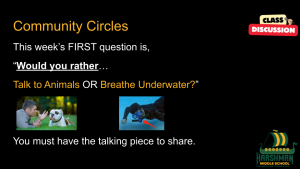 We’ve also found that visuals are essential to helping students engage. Each week, we use a normed Google Slides presentation that includes an overview of the community agreements and one slide per question, complete with relevant visuals. These cues guide the conversation, give students multiple ways to access the content, and make participation easier for everyone—especially students who might struggle with language, attention, or confidence.
One of our most striking moments came with a teacher who had previously avoided Circles because they felt like too much work. After using the slides for just two weeks, he reflected, “I just didn’t get it before because it felt like it was all on me to figure it out. This structure made it so easy, and I got to have fun with it.” Moments like this remind us that good structure benefits both students and educators.
Structure Creates Space for Meaning
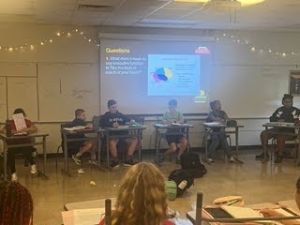 Community Circles work best when they’re structured with care. We treat Circles with the same intentionality as a team project: setting clear expectations for listening, taking turns, and respecting different perspectives. Not every circle needs to solve a problem, but every circle should be meaningful. Whether students are sharing a laugh, exploring a challenge, or celebrating a success, they’re practicing the skills that make communities stronger—trust, respect, and understanding.
“Consistency matters more than perfection.”
Getting Started
If you’re new to Community Circles, start simple. Choose one day a week and craft a set of three building questions around a theme that fits your class or school focus. Use visuals or slides to guide the conversation and support accessibility for all learners. Model vulnerability, listen actively, and allow students to lead as they grow more comfortable.
Most importantly, consistency matters more than perfection. When we give students structured space to share their voices, they remind us of something profound: connection doesn’t happen by accident—it happens one question at a time.
Resources
Please login or register to claim PGPs.
Alternatively, you may use the PGP Request Form if you prefer to not register an account.